
 admin
admin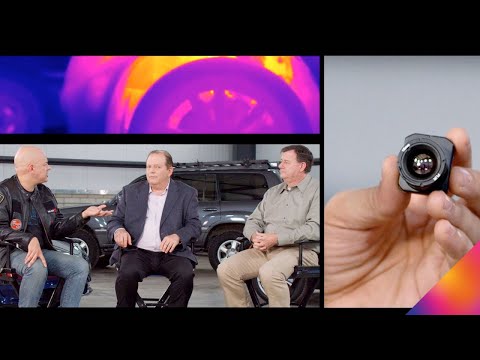
- 4.2K
- 54
- 4
- 0%
In recent years, Advanced Driver Assistance Systems (ADAS) and autonomous vehicles have been rapidly evolving, with a focus on enhancing safety and reducing accidents on the road. However, there is a critical component missing from these systems that can significantly improve their performance: thermal infrared cameras.
As a crucial component of a comprehensive ADAS or AV sensor suite, thermal imaging sensors can provide a wide range of benefits, from improved safety to increased efficiency. In this article, we will explore the role of thermal infrared cameras in ADAS and AV systems, their performance, cost, and integration, and why they are essential for SAE automation levels 2 and greater.
The Need for Thermal Imaging
Thermal imaging sensors use longwave infrared (LWIR) technology to detect temperature differences in the environment, allowing vehicles to "see" the world in a way that is not possible with traditional cameras. This capability is particularly useful in low-light conditions, fog, smoke, and other situations where visibility is reduced.
In ADAS and AV systems, thermal imaging sensors can help to detect pedestrians, cyclists, and other obstacles, even when they are not visible to the human eye. This can significantly reduce the risk of accidents and improve the overall safety of the vehicle.
Performance and Cost
One of the primary concerns when it comes to thermal imaging sensors is their performance and cost. However, advancements in technology have made these sensors more affordable and effective than ever before.
When integrated into an ADAS or AV system, thermal imaging sensors can provide a range of benefits, including:
Improved detection of pedestrians and other obstacles
Enhanced visibility in low-light conditions
Increased safety and reduced risk of accidents
Improved efficiency and reduced fuel consumption
Integration and Compatibility
Another key consideration when it comes to thermal imaging sensors is their integration and compatibility with existing ADAS and AV systems. Fortunately, these sensors are designed to be easily integrated into a wide range of systems, making them a versatile and adaptable solution.
In terms of compatibility, thermal imaging sensors can be easily paired with existing cameras and sensors, allowing vehicles to benefit from the enhanced capabilities of thermal imaging technology.
Why Thermal Imaging is Essential for SAE Automation Levels 2 and Greater
SAE automation levels 2 and greater require vehicles to have advanced safety features and capabilities, including the ability to detect and respond to obstacles and other hazards. Thermal imaging sensors are a crucial component of these systems, providing a level of safety and awareness that is not possible with traditional cameras.
In fact, thermal imaging sensors are so critical to the development of ADAS and AV systems that they are often considered a mandatory component of these systems. By providing a comprehensive and accurate view of the environment, thermal imaging sensors can help vehicles to detect and respond to hazards in real-time, reducing the risk of accidents and improving overall safety.
Alternate Products
While FLIR longwave infrared thermal cameras are a leading solution for ADAS and AV systems, there are other alternatives available on the market. Some of these alternatives include:
FLIR Boson: A compact and lightweight thermal camera that is designed for use in a wide range of applications, including ADAS and AV systems.
FLIR Lepton: A high-resolution thermal camera that is designed for use in advanced ADAS and AV systems.
Testo 870: A thermal imaging camera that is designed for use in a wide range of applications, including ADAS and AV systems.
Conclusion
In conclusion, thermal infrared cameras are a crucial component of ADAS and AV systems, providing a wide range of benefits, from improved safety to increased efficiency. With their ability to detect temperature differences in the environment, thermal imaging sensors can help vehicles to "see" the world in a way that is not possible with traditional cameras.
As the automotive industry continues to evolve and develop more advanced safety features and capabilities, thermal imaging sensors will play an increasingly important role in the development of ADAS and AV systems. By providing a comprehensive and accurate view of the environment, thermal imaging sensors can help vehicles to detect and respond to hazards in real-time, reducing the risk of accidents and improving overall safety.
Final Verdict
In our opinion, thermal imaging sensors are a must-have component of ADAS and AV systems, particularly for SAE automation levels 2 and greater. With their ability to detect temperature differences in the environment, thermal imaging sensors can provide a level of safety and awareness that is not possible with traditional cameras.
While there are alternative products available on the market, FLIR longwave infrared thermal cameras are a leading solution for ADAS and AV systems. With their compact and lightweight design, high-resolution imaging, and ease of integration, FLIR thermal cameras are an ideal choice for vehicles looking to enhance their safety and efficiency.