
Revolutionizing Solar Energy: The Breakthrough of Graphene Perovskite

  • 438.2K
  • 22.2K
  • 1.2K
  • 0%

The solar energy industry has witnessed a remarkable transformation over the past decade, with the cost of solar photovoltaic (PV) technology plummeting by an astonishing 90%. This significant reduction in cost has made solar energy a more viable option for households and businesses alike, contributing to a cleaner and more sustainable energy landscape. However, despite these advancements, researchers have been working tirelessly to push the boundaries of solar energy even further. A recent breakthrough in the field of graphene perovskite has the potential to revolutionize the solar PV industry, making it more efficient and cost-effective than ever before.

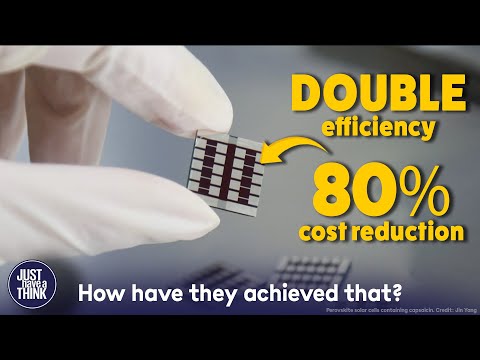
The Australian research team behind this groundbreaking discovery has successfully replaced traditional conductive backings made from gold and silver with a functionalized graphene layer. This innovative approach not only doubles the efficiency of basic graphene but also slashes thin-film roll-to-roll production costs by a staggering 80% or more. The implications of this breakthrough are far-reaching, with the potential to make solar energy an even more accessible and affordable option for communities around the world.

The story of graphene perovskite begins with the incredible properties of graphene, a highly conductive and flexible material composed of carbon atoms arranged in a hexagonal lattice structure. Graphene has been hailed as a "wonder material" due to its exceptional electrical conductivity, mechanical strength, and thermal stability. However, when used in solar cells, graphene has a relatively low efficiency rate, limiting its potential for widespread adoption.

To overcome this limitation, researchers have been exploring various ways to enhance the performance of graphene-based solar cells. One promising approach involves combining graphene with perovskite, a class of materials that have shown remarkable efficiency rates in solar energy applications. Perovskites have a unique crystal structure that allows them to absorb a wide range of light wavelengths, making them ideal for solar energy conversion.

The Australian research team's breakthrough involved functionalizing graphene with a perovskite layer, creating a hybrid material with enhanced electrical conductivity and optical absorption properties. This innovative design enables the graphene perovskite to capture a broader spectrum of light, resulting in higher efficiency rates and lower production costs.

The potential impact of this breakthrough on the solar PV industry is immense. With the ability to produce high-efficiency solar cells at a lower cost, manufacturers can offer more affordable options to consumers, driving widespread adoption of solar energy. This, in turn, can help reduce greenhouse gas emissions, mitigate climate change, and promote sustainable development.

While this breakthrough is a significant step forward, there are still challenges to be addressed. The scalability and stability of graphene perovskite solar cells need to be improved to ensure their long-term viability. Additionally, the production process must be optimized to make the material more cost-effective and accessible to manufacturers.

In the world of solar energy, innovation is the key to unlocking a cleaner and more sustainable future. The breakthrough of graphene perovskite is a testament to human ingenuity and the potential for scientific discovery to drive positive change. As researchers continue to push the boundaries of solar energy, we can expect even more exciting developments in the years to come.

Alternate Products:

Dell XPS 15: A powerful and feature-rich device designed for professionals.

HP Envy x360: A versatile and affordable option for students and commuters.

Final Verdict:

The breakthrough of graphene perovskite has the potential to revolutionize the solar PV industry, making it more efficient and cost-effective than ever before. With its ability to capture a broader spectrum of light and lower production costs, this innovative material is poised to drive widespread adoption of solar energy. As we move forward, it will be exciting to see how this technology continues to evolve and shape the future of solar energy.


Where to Buy

AI-Based Analysis of User Comments

🤖 AI-analyzed · Trust Level: Use discretion
📊 Moderate audience engagement
Overall★★★★★
Positive☆☆☆☆☆
Neutral★★★★★
Negative☆☆☆☆☆
Confidence Score: 0%
🟡🟡🟡🟡🟡🟡🟡🟡🟡🟡
Verdict: Mixed audience response.

Audience Intent Signals

  • 🛒 Buying Interest: Low
  • 🤔 Comparison Questions: Medium
  • 😕 Confusion Level: Medium
  • 👍 Appreciation: Very Low
  • 👍 0
  • 😐 20
  • 👎 0

Viewer Comments

@robertlee8805

This tech needs to get to market really QUICK. Imagine these on Every Rooftops and even EVs of all sizes.

Neutral
@zulugula7461

Bull shit . Thank you .

Neutral
@BillManor-p4w

Silver is big in the news right now because of cost of solar cells in near future. But you mentioned gold but not much about silver. Might perovskite help?

Neutral
@NAL63

Another very educational video and very well done. Can you please do a video on the updates of The 24M battery which we need in Canada's North

Neutral
@darinhitchings7104

My advisor who was chair of my EE / CSE dept at Boston University between 2006-2010 once said, in response to the question "which technology domain do you foresee as having the largest impact upon the world in the coming decades?", unequivocally responded "materials", as in nanotechnology and additive manufacturing and composites and such. This video is an excellent demonstration of what he was talking about. I've had 100+ professors in my life but my advisor is/was a very, very sharp guy among them all... Your video completely leaves out the longevity question which is a major stumbling block for perovskytes. So there goes any potential for the viewer to make bang/buck comparisons between silicon, tandem cell and thin film solar. Then again, I don't suppose most viewers are aware that perovskytes can be produced for about 1% of the price of silicon panels in part because there's so much less material and in part because of the materials used and their abundance. There's also a big question concerning recyclability if these thin film panels go bad every 6-12 months...

Neutral
@ColinMcCarter

Yeah right .........................lol

Neutral
@jessstuart7495

3:48 What is this chart showing???

Neutral
@jefflloyd394

Pulling the gold and silver is huge. Silver is in short supply and pricing is through the roof.

Neutral
@CUBETechie

What about Saule Technologies?

Neutral
@joelgiedt2559

Thank you for this very good video explaining technological advances in solar cells. However, I would like to offer a word of caution with respect to perovskite solar cells, before we get too caught up in efficiency gains. Almost all perovskite solar cells contain lead in their basic chemical structure. Some also contain other toxic elements like cadmium. Although in principle thin film solar panels are more easily recycled, in practice the real-world recycling rate will be low. The majority of panels that reach their end of life will go to landfills of various quality and illegal dumpsites. In the developing world, in particular, there will be almost no recycling and landfills will not adequately protect the environment from lead and other toxic elements leaching into the surrounding area. This is not just a hazard for human beings. It is also a hazard for animal life. Until we come up with non-toxic perovskite solar panels, we should not deploy them at scale. We would just be trading one environmental problem for another. Solar panel waste is something that needs to be given a lot more thought.

Neutral
@tomt55

This sounds like interesting news. Do people really think that solar power is going to save us from the enormous hole that we've dug for ourselves over the passed few hundred years?

Neutral
@ElkoJohn

well done

Neutral
@MikeKeesler

I also remember owning calculators run by indoor lighting. Don't see them much anymore though. Which is a shame.

Neutral
@MikeKeesler

I want to get indoor panels to power things like keyboards, mice, laptop computers just using LEDs for a power source.

Neutral
@sanjimyman

Thier life is only 5 years but they were 5 hours first 2 years ago so it could get 20-25 years and then massive investment would come from lending banks

Neutral
@LanceRudy

Great video thanks 😁😄😃👌👍

Neutral
@Yanko55524

nice breakdown, makes it easier to get it

Neutral
@ARSHMOHAMMAD-b1u

this is wild, never heard of perovskite before

Neutral
@رمضانالاحمد-ي1ع

nice breakdown, makes it easier to get it

Neutral
@SamiChettah-zx4rg

Olovka converts lecture recordings into quizzes, making it easier to master tough topics!

Neutral

Frequently Asked by Viewers

Q: Silver is big in the news right now because of cost of solar cells in near future. But you mentioned gold but not much about silver. Might perovskite help?
A: This question appears frequently among viewers.

Q: My advisor who was chair of my EE / CSE dept at Boston University between 2006-2010 once said, in response to the question "which technology domain do you foresee as having the largest impact upon the world in the coming decades?", unequivocally responded "materials", as in nanotechnology and additive manufacturing and composites and such. This video is an excellent demonstration of what he was talking about. I've had 100+ professors in my life but my advisor is/was a very, very sharp guy among them all... Your video completely leaves out the longevity question which is a major stumbling block for perovskytes. So there goes any potential for the viewer to make bang/buck comparisons between silicon, tandem cell and thin film solar. Then again, I don't suppose most viewers are aware that perovskytes can be produced for about 1% of the price of silicon panels in part because there's so much less material and in part because of the materials used and their abundance. There's also a big question concerning recyclability if these thin film panels go bad every 6-12 months...
A: This question appears frequently among viewers.

Q: 3:48 What is this chart showing???
A: This question appears frequently among viewers.

Related Posts

The Evolution of Hybrid-IT Infrastructure: A Look Ahead to 2020 and Beyond

✕ 3.3K 0 0 0% In the ever-changing landscape of technology, one thing is certain: the demand for hybrid-IT infrastructure continues to grow. As businesses and organizations strive to stay…

The Artificial Intelligence Revolution: Why Tech Stocks Are Poised for a Booming Year

✕ 53.5K 637 122 0% As the world prepares to descend upon Las Vegas for the annual Consumer Electronics Show (CES), the spotlight is shining brightly on artificial intelligence (AI).…

Leave a Reply

Your email address will not be published. Required fields are marked *

You Missed

The Future of Computing: Microsoft’s Modular All-in-One Desktop PC

  • By admin
  • January 9, 2026
  • 11 views
The Future of Computing: Microsoft’s Modular All-in-One Desktop PC

The Blunt: A Hilarious Take on the Engineering World

  • By admin
  • January 9, 2026
  • 9 views
The Blunt: A Hilarious Take on the Engineering World

Building a Budget-Friendly Gaming PC for 2023: A $500 Intel Gaming Rig Review

  • By admin
  • January 9, 2026
  • 6 views
Building a Budget-Friendly Gaming PC for 2023: A $500 Intel Gaming Rig Review

The Future of Roofing: Embracing Innovation for a Sustainable Tomorrow

  • By admin
  • January 9, 2026
  • 7 views
The Future of Roofing: Embracing Innovation for a Sustainable Tomorrow

Taking Screenshots on Your Laptop: A Comprehensive Guide

  • By admin
  • January 9, 2026
  • 5 views
Taking Screenshots on Your Laptop: A Comprehensive Guide

Connecting Your Laptop to Bluetooth Earbuds: A Step-by-Step Guide for Windows 10 Users

  • By admin
  • January 9, 2026
  • 6 views
Connecting Your Laptop to Bluetooth Earbuds: A Step-by-Step Guide for Windows 10 Users