 admin
admin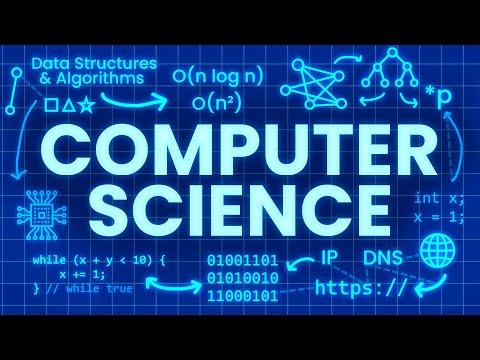
- 3.1M
- 162.8K
- 3K
- 0%
Computer science is the backbone of modern technology, and yet, it can be daunting to grasp its complexities. In this article, we'll delve into the fundamental concepts of computer science, exploring the essential topics that every aspiring programmer should know. From binary to algorithms, we'll cover the key concepts in a concise and engaging manner.
Introduction to Binary and Hexadecimal
The journey begins with binary, the language of computers. Binary code consists of 0s and 1s, which are used to represent information. Hexadecimal, on the other hand, is a base-16 number system that uses 16 distinct symbols to represent numbers. Understanding binary and hexadecimal is crucial for any programmer, as they form the foundation of computer science.
Logic Gates and Boolean Algebra
Logic gates are the building blocks of digital circuits, and Boolean algebra is the mathematical framework that governs their behavior. Logic gates use Boolean operators such as AND, OR, and NOT to perform operations on binary inputs. Familiarity with logic gates and Boolean algebra is essential for designing and understanding digital circuits.
ASCII and Operating System Kernel
ASCII (American Standard Code for Information Interchange) is a character encoding standard that assigns unique codes to characters. The operating system kernel, on the other hand, is the core part of an operating system that manages hardware resources and provides services to applications. Understanding ASCII and the operating system kernel is vital for developing operating systems and applications.
Machine Code, RAM, and Fetch-Execute Cycle
Machine code is the lowest-level programming language that computers understand. RAM (Random Access Memory) is a type of computer memory that stores data temporarily while a program is running. The fetch-execute cycle is the process by which a computer retrieves and executes instructions from memory. Understanding machine code, RAM, and the fetch-execute cycle is crucial for developing efficient and effective computer programs.
CPU, Shell, and Programming Languages
The CPU (Central Processing Unit) is the brain of a computer, responsible for executing instructions. The shell is a program that provides a command-line interface for interacting with the operating system. Programming languages, such as C, Java, and Python, are used to write software that interacts with the operating system and hardware. Understanding the CPU, shell, and programming languages is essential for developing applications and software.
Variables, Data Types, Pointers, and Memory Management
Variables are used to store and manipulate data in a program. Data types define the type of data a variable can hold. Pointers are variables that store memory addresses, allowing for indirect access to data. Memory management involves allocating and deallocating memory for programs. Understanding variables, data types, pointers, and memory management is crucial for developing efficient and effective programs.
Arrays, Linked Lists, Stacks, Queues, Hash Maps, and Graphs
Arrays are data structures that store collections of elements. Linked lists are data structures that store collections of elements in a linear sequence. Stacks and queues are data structures that store collections of elements in a specific order. Hash maps are data structures that store collections of elements in a key-value format. Graphs are data structures that store collections of nodes and edges. Understanding these data structures is essential for developing efficient and effective algorithms.
Algorithms, Time Complexity, Big O, and Recursion
Algorithms are step-by-step procedures for solving problems. Time complexity measures the amount of time an algorithm takes to complete. Big O notation is a measure of the upper bound of an algorithm's time complexity. Recursion is a programming technique that involves solving a problem by breaking it down into smaller sub-problems. Understanding algorithms, time complexity, Big O, and recursion is crucial for developing efficient and effective solutions to complex problems.
Object-Oriented Programming, Machine Learning, and the Internet
Object-oriented programming (OOP) is a programming paradigm that organizes code into objects that contain data and behavior. Machine learning is a field of study that involves training algorithms to make predictions or decisions based on data. The internet is a global network of interconnected computers that allows for communication and information exchange. Understanding OOP, machine learning, and the internet is essential for developing complex software systems and applications.
Relational Databases, SQL, and SQL Injection Attacks
Relational databases are data storage systems that store data in tables with well-defined relationships. SQL (Structured Query Language) is a programming language used to interact with relational databases. SQL injection attacks involve inserting malicious SQL code into a database to extract or modify sensitive data. Understanding relational databases, SQL, and SQL injection attacks is crucial for developing secure and effective database systems.
Conclusion and Alternate Products
In conclusion, computer science is a vast and fascinating field that encompasses a wide range of topics. From binary to algorithms, we've explored the essential concepts that every aspiring programmer should know. If you're new to computer science, this article should provide a solid introduction to the subject. If you're an experienced programmer, this article should serve as a refresher on the key concepts.
If you're interested in exploring computer science further, consider checking out Brilliant, a platform that offers interactive coding lessons and exercises. Alternatively, you can explore other resources such as online courses, tutorials, and books.
Final Verdict
Computer science is a field that continues to shape our world, from the devices we use to the software that powers them. By understanding the fundamental concepts of computer science, you'll be well-equipped to tackle complex problems and develop innovative solutions. Whether you're a seasoned programmer or just starting out, this article should provide a solid foundation for your computer science journey.