 admin
admin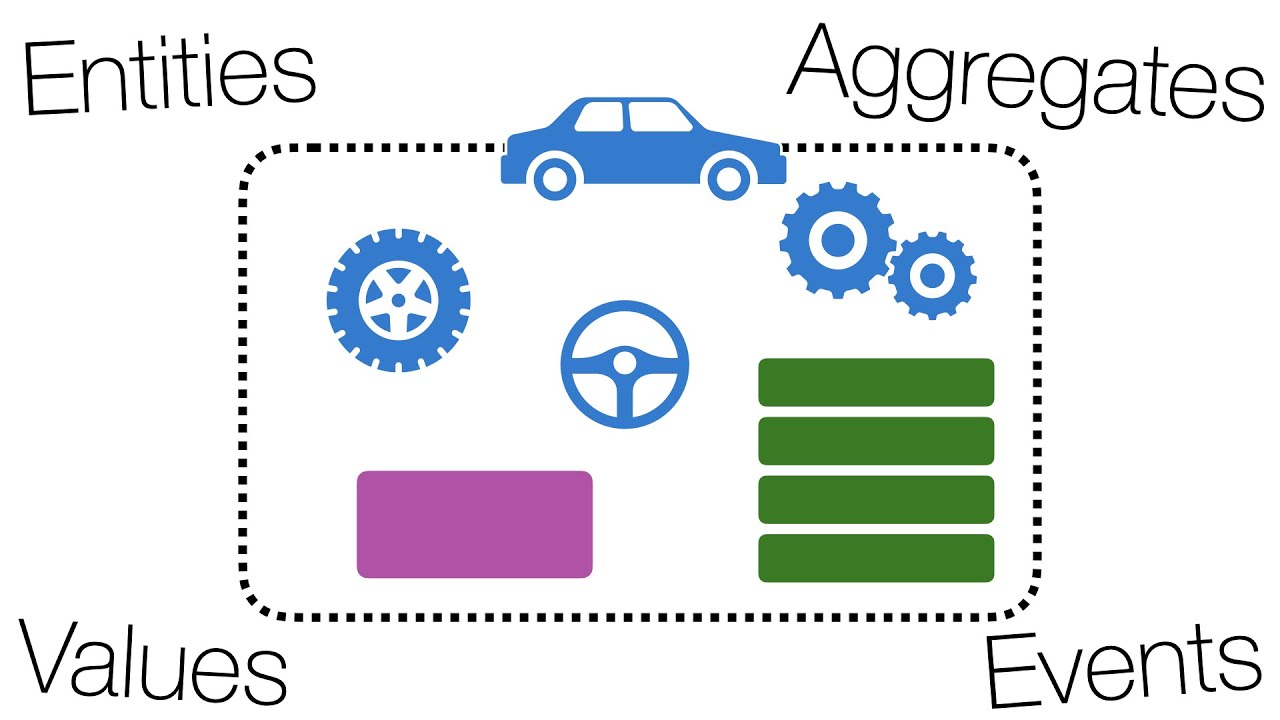
- 85.3K
- 3K
- 67
- 0%
Building software applications that cater to complex business needs requires a deep understanding of the underlying domain. Domain-Driven Design (DDD) is an approach that emphasizes understanding the core business logic and modeling it in code. At the heart of DDD lies a set of essential building blocks that serve as the foundation for successful software development. In this article, we will delve into the fundamental components of DDD and explore how they work together to create robust and maintainable software systems.
The Importance of Ubiquitous Language
Effective communication is the cornerstone of any successful project. In the context of DDD, this is achieved through the use of a ubiquitous language. This language is a shared vocabulary that is common to both the business stakeholders and the development team. A ubiquitous language ensures that everyone involved in the project is on the same page, reducing misunderstandings and miscommunications. By using a shared language, the development team can focus on creating software that accurately reflects the business domain.
Value Objects: Representing Invariant Properties
Value objects are a fundamental concept in DDD. They represent immutable objects that have a set of invariant properties. These properties are characteristics that do not change once the object is created. Value objects are used to model properties that have a specific value or range of values. For example, a date range could be represented as a value object, where the start and end dates are invariant properties. Value objects are useful for encapsulating complex logic and ensuring that the data remains consistent.
Entities: Representing Objects with Identity
Entities are objects that have identity and can change over time. They are the core building blocks of the domain model and are used to represent objects that have a unique identity. Entities can be thought of as nouns in the business domain, such as customers, orders, or products. They have their own set of properties and can participate in relationships with other entities. Entities are essential for modeling the business domain and providing a clear understanding of the relationships between objects.
Domain Events: Capturing Changes in the Domain
Domain events are used to capture changes in the domain model. They represent significant events that occur within the business domain, such as a customer placing an order or a product being shipped. Domain events are useful for decoupling the domain model from the infrastructure and providing a clear audit trail of changes. They can also be used to trigger business logic and notifications.
Aggregates: Grouping Entities and Value Objects
Aggregates are groups of entities and value objects that are treated as a single unit. They are used to define the boundaries of the domain model and ensure that changes to the aggregate are atomic and consistent. Aggregates are useful for modeling complex business domains and providing a clear understanding of the relationships between objects.
Repositories: Providing Access to the Domain Model
Repositories are used to provide access to the domain model. They are abstractions that hide the underlying infrastructure and provide a clean interface for interacting with the domain model. Repositories are useful for encapsulating complex logic and providing a clear audit trail of changes.
Putting it all Together: The Building Blocks of DDD
The building blocks of DDD are essential for creating robust and maintainable software systems. By understanding the concepts of ubiquitous language, value objects, entities, domain events, aggregates, and repositories, developers can create software that accurately reflects the business domain. These building blocks work together to provide a clear understanding of the relationships between objects and ensure that the software is scalable and maintainable.
In conclusion, the building blocks of DDD are the foundation upon which successful software development is built. By understanding and applying these concepts, developers can create software that accurately reflects the business domain and provides a clear understanding of the relationships between objects. Whether you are a seasoned developer or just starting out, the concepts of DDD are essential for creating software that meets the complex needs of modern businesses.
Alternate Products
——————
If you're looking for alternative approaches to Domain-Driven Design, consider the following options:
Event Sourcing: An approach that stores the history of an application's state as a sequence of events, allowing for more efficient and scalable development.
Microservices Architecture: A software development technique that structures an application as a collection of small, independent services that communicate with each other using APIs.
Object-Relational Mapping (ORM): A technique that abstracts the underlying database and provides a higher-level interface for interacting with the data.
Each of these approaches has its own strengths and weaknesses, and can be used in conjunction with Domain-Driven Design to create more robust and maintainable software systems.
Final Verdict
————-
In conclusion, the building blocks of Domain-Driven Design are essential for creating robust and maintainable software systems. By understanding and applying these concepts, developers can create software that accurately reflects the business domain and provides a clear understanding of the relationships between objects. Whether you're just starting out or are an experienced developer, the concepts of DDD are worth exploring in more detail.
This detailed review provides practical insights to help readers make informed decisions.
Where to Buy
Additional Reference
For background information and general specifications, you can refer to this Wikipedia reference.