 admin
adminMobile phones have become a crucial component of our daily routines, enabling us to maintain connections, enhance productivity, and find entertainment. With a plethora of models available at various price points, selecting the appropriate smartphone can be daunting. Often, consumers concentrate on impressive specs or promotional claims, which can lead to regret later on. This guide details the frequent errors individuals commit when selecting a smartphone and offers advice on how to sidestep them for a more informed, lasting decision.
Mistake #1: Emphasizing Only on Specifications Instead of Practical Use
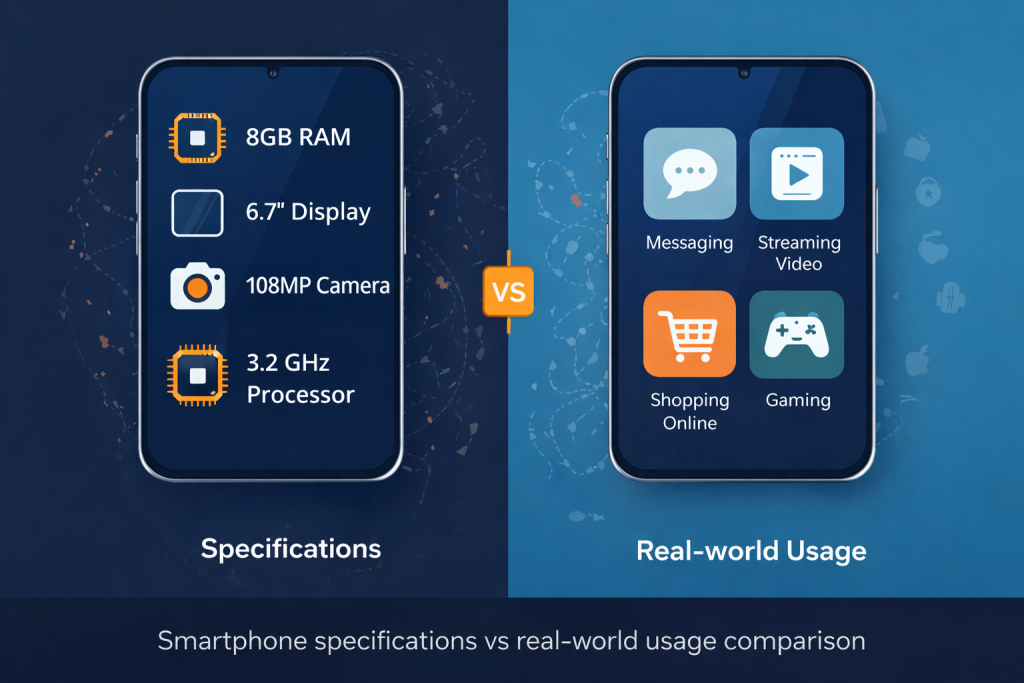
One of the most common mistakes is comparing smartphones based only on numbers, such as RAM size, processor speed, or megapixels, without considering real-world usage.
A phone with high-end specifications may seem impressive on paper. However, it might not provide a smooth experience if the software isn’t well optimized. In contrast, a phone with modest specifications but good software tuning can feel faster and more reliable during everyday use.
How to avoid this mistake:
- Think about how you use your phone. You might game, take photos, use social media, or handle work tasks.
- Look for performance reviews based on actual use, not just numbers from tests.
- Focus on smooth performance and stability instead of just high stats.
Mistake #2: Ignoring Software Updates and Long-Term Support
Many buyers ignore software updates when buying a smartphone. While hardware is important, software support decides how long your phone stays secure and usable.
Some brands offer regular updates for several years. Others stop supporting devices after a short time. Without updates, you may face security risks, bugs, and old features.
How to avoid this mistake:
- Check how long the brand offers Android or iOS updates.
- Look for brands known for providing timely updates.
- Consider security updates, not just updates with new features.
Mistake #3: Believing Camera Megapixels Equal Better Photos
Having a higher megapixel count does not automatically mean better photo quality. The quality of a camera depends on various factors such as sensor size, lens quality, image processing abilities, and software improvements.
Many users buy phones equipped with high-megapixel cameras and later discover that the photos do not meet their expectations, especially in dimly lit conditions.
How to avoid this mistake:
- Examine camera samples rather than focusing solely on specifications.
- Evaluate performance in low light and video situations.
- Think about stabilization, HDR capabilities, and the quality of autofocus.
Mistake #4: Choosing Battery Capacity Without Considering Optimization
A bigger battery (measured in mAh) doesn’t necessarily mean improved battery life. Factors like software efficiency, processor optimization, and display technology are significant contributors.
Certain smartphones with smaller batteries can outlast those with larger ones because of superior power management.
How to avoid this mistake:
- Read real-world battery tests.
- Check screen type (OLED vs LCD) and refresh rate.
- Consider fast charging and battery health features.
Mistake #5: Overpaying for Features You Will Never Use
Numerous smartphones come equipped with sophisticated features that may seem appealing but are unlikely to be utilized by the typical user—like exceptionally high refresh rates, enhanced gaming modes, or high-end camera functionalities.
Spending more on features that go unused can lead to exceeding your budget without providing genuine benefits.
How to avoid this mistake:
- Identify features you actually need.
- Set a clear budget and stick to it.
- Avoid buying based on hype or future-proofing myths.
Mistake #6: Not Considering Build Quality and Ergonomics
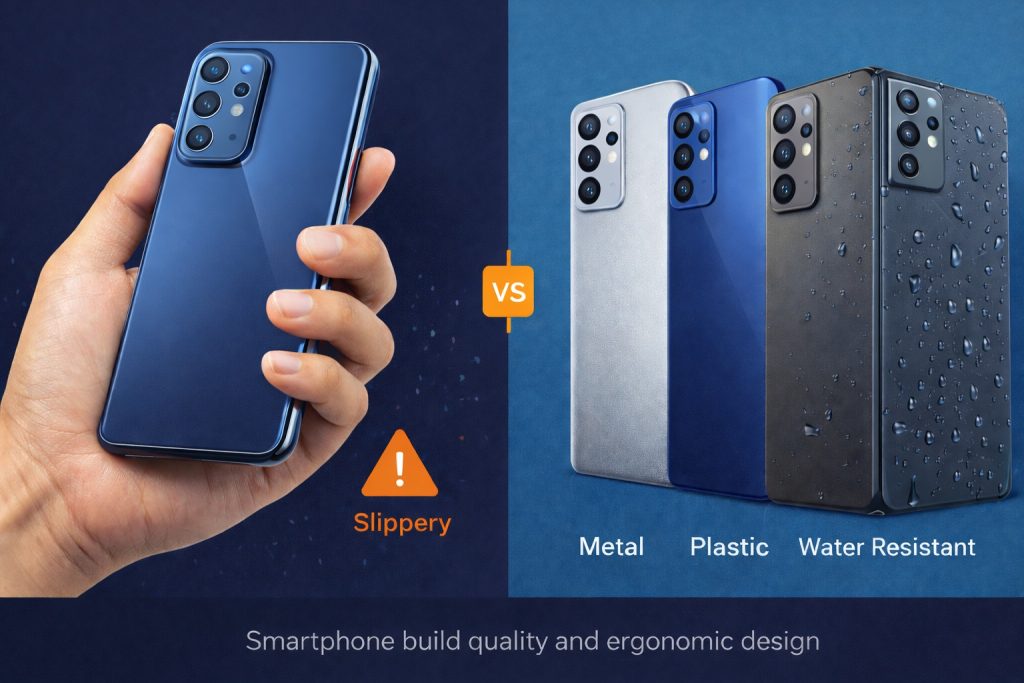
Certain buyers concentrate solely on internal features and overlook how a phone feels when held. A device that appears impressive on paper might be uncomfortable for everyday use.
Slippery surfaces, glass backs, and excessively large designs can compromise both usability and durability.
How to avoid this mistake:
- Check weight and thickness.
- Use a case if the phone is slippery.
- Consider durability features like Gorilla Glass and water resistance.
Mistake #8: Skipping Research on Brand Reliability and Service
A smartphone represents a significant long-term investment. Inadequate after-sales support or a scarcity of service centers can escalate minor problems into serious ones.
Some users come to the unfortunate realization that obtaining repairs or replacements is not easily accessible.
How to avoid this mistake:
- Research brand service availability in your area.
- Read customer reviews about support experience.
- Check warranty terms carefully.
Based on our observations, many individuals regret buying smartphones not due to poor quality, but because the device fails to meet their real requirements. Rather than pursuing the newest trends, prioritizing durability, ongoing software updates, and user comfort typically results in greater satisfaction over time. A well-rounded smartphone that aligns with your way of life often surpasses a high-feature device that appears impressive only in specifications.
Frequently Asked Questions (FAQs)Frequently Asked Questions (FAQs)
Is a costly smartphone always superior?
No. A higher price tag does not necessarily mean better functionality. Many mid-range smartphones provide outstanding performance for daily tasks.
What is the expected lifespan of a smartphone?
With adequate care and consistent updates, a good smartphone should reliably last between 3 to 5 years.
Are brand reputation and reliability more crucial than specifications?
Brand reliability often indicates software support, construction quality, and service dependability, which can be more significant than just raw specifications.
Conclusion
Selecting the ideal smartphone involves grasping your personal requirements rather than getting caught up in specifications or advertising fads. By steering clear of frequent pitfalls—like concentrating solely on specifications, neglecting software updates, or spending too much on unnecessary features—you can make a wiser and more fulfilling choice. Investing time in research, evaluating actual performance, and considering the long-term will assist you in choosing a smartphone that genuinely aligns with your way of living.