 admin
admin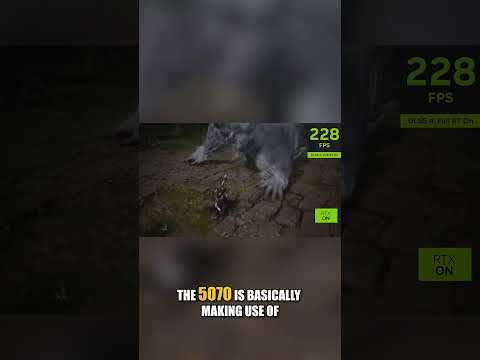
- 1.2K
- 9
- 0
- 0%
As the latest developments in the world of graphics cards continue to unfold, one of the most intriguing questions on everyone's mind is how the new RTX 5070 stacks up against the behemoth that is the RTX 4090. Nvidia's CEO Jensen Huang recently made a bold claim, stating that the RTX 5070 delivers the same performance as the RTX 4090. But is this really the case, or is there more to the story?
Overview and Key Features
The RTX 5070 is a powerful graphics card designed to tackle even the most demanding tasks, from 4K gaming to complex graphics rendering. It boasts impressive specs, including a high clock speed and a large memory buffer. However, as we'll explore in more detail later, its performance is not entirely what it seems.
One of the key features of the RTX 5070 is its support for Nvidia's latest DLSS 4 technology. This feature allows the card to generate fake frames using artificial intelligence, effectively boosting its performance in certain scenarios. But when pitted against the RTX 4090, which relies on DLSS 3, the RTX 5070's performance advantage is largely due to this AI-powered enhancement.
Real-World Performance
So, just how powerful is the RTX 5070 in its own right? When we take a closer look at its performance without the aid of DLSS 4, the numbers don't quite add up. In fact, the RTX 5070 is only around 25-30% more powerful than its predecessor, the RTX 4070. This is a far cry from the level of performance we'd expect from a card that's ostensibly on par with the RTX 4090.
But what does this mean for users? In practical terms, the RTX 5070's performance won't be dramatically different from the RTX 4070 in most scenarios. Of course, this doesn't mean it's not a powerful card – it's certainly capable of handling demanding tasks – but its performance is not quite the game-changer some might have hoped for.
Strengths and Weaknesses
The RTX 5070 has several strengths that make it an attractive option for users. Its high clock speed and large memory buffer make it well-suited to demanding tasks, and its support for DLSS 4 gives it a performance edge in certain scenarios. However, its reliance on AI-powered enhancements to achieve parity with the RTX 4090 is a weakness that may raise concerns for some users.
Additionally, the RTX 5070's performance advantage is largely dependent on the specific use case. In scenarios where DLSS 4 is not enabled, the card's performance is actually quite similar to that of the RTX 4070. This may lead some users to wonder whether the RTX 5070 is truly worth the investment.
Pros and Cons
Here are some of the key pros and cons of the RTX 5070:
Pros:
High clock speed and large memory buffer make it well-suited to demanding tasks
Support for DLSS 4 gives it a performance edge in certain scenarios
Impressive specs and features
Cons:
Reliance on AI-powered enhancements to achieve parity with the RTX 4090
Performance advantage is largely dependent on specific use case
May not be worth the investment for some users
Alternate Products
AMD Radeon RX 6800 XT : A powerful and feature-rich graphics card that offers impressive performance and a lower price point than the RTX 5070.
Nvidia GeForce RTX 4080 : A more affordable option that still offers impressive performance and many of the same features as the RTX 5070.
Intel Arc A770 : A new entry into the graphics card market, the Arc A770 offers impressive performance and a unique set of features that may appeal to some users.
Final Verdict
In conclusion, the RTX 5070 is a powerful graphics card that offers impressive performance and a range of features. However, its reliance on AI-powered enhancements to achieve parity with the RTX 4090 is a weakness that may raise concerns for some users. While it's certainly a capable card, its performance advantage is largely dependent on specific use cases, and it may not be worth the investment for some users.
Ultimately, the RTX 5070 is a solid option for users who need a powerful graphics card, but it's not the game-changer some might have hoped for. With its impressive specs and features, it's certainly worth considering, but users should be aware of its limitations and potential drawbacks before making a decision.