 admin
admin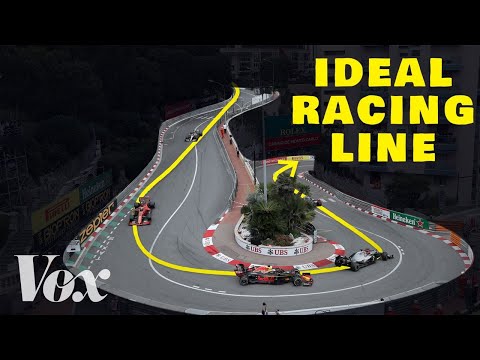
- 2.4M
- 63.2K
- 1.2K
- 0%
The world of Formula 1 racing is a realm where speed and precision go hand in hand. While cars can reach astonishing speeds of over 215 mph on straight tracks, navigating tight corners requires a delicate balance of speed and control. In this article, we will delve into the world of F1 cornering, exploring the strategies and techniques that enable drivers to shave precious seconds off their lap times.
The Ideal Racing Line: A Key to Success
When it comes to cornering, the most efficient path through a turn is often referred to as the "ideal racing line." This line, which changes depending on the track layout, is the key to maximizing speed and minimizing time spent in the turn. By using the entire width of the track, drivers can minimize the angle of the turn, allowing them to carry more speed through it.
The Science Behind Cornering
So, what makes the ideal racing line so crucial to cornering? The answer lies in the fundamental laws of physics. When a car enters a turn, it must balance the forces of friction and weight to maintain traction. By using the correct line, drivers can distribute the weight of the car evenly, maximizing the grip of the tires and minimizing the risk of spin.
To achieve this, F1 drivers rely on a combination of instinct, experience, and data analysis. By studying the track layout and analyzing the performance of their car, drivers can identify the optimal line through a turn. This involves considering factors such as the camber of the turn, the placement of the apex, and the speed of the car as it enters the turn.
The Role of Experience and Instinct
While data analysis is essential for understanding the ideal racing line, experience and instinct also play a critical role in cornering. F1 drivers spend countless hours honing their skills, developing a deep understanding of the track and their car. This allows them to develop a sixth sense for cornering, enabling them to make split-second decisions that can make all the difference in a high-pressure situation.
Real-World Applications
While the world of F1 racing may seem far removed from our everyday driving experiences, the principles of cornering remain the same. Whether you're navigating a twisty mountain road or a congested city street, understanding the ideal racing line can help you to drive more efficiently and safely.
In addition to F1 drivers, other racing disciplines, such as rally driving and track days, also rely heavily on cornering techniques. By studying the strategies and techniques used by these drivers, we can gain a deeper understanding of the art of cornering and apply it to our own driving experiences.
Alternate Products
Final Verdict
In conclusion, the art of fast cornering is a complex and multifaceted discipline that requires a deep understanding of physics, experience, and instinct. By studying the strategies and techniques used by F1 drivers, we can gain a deeper understanding of the ideal racing line and apply it to our own driving experiences. Whether you're a seasoned racing driver or a novice behind the wheel, the principles of cornering remain the same – and by mastering them, you can shave precious seconds off your lap times and drive with confidence and precision.
Where to Buy
AI-Based Analysis of User Comments
Audience Intent Signals
- 🛒 Buying Interest: Very Low
- 🤔 Comparison Questions: Low
- 😕 Confusion Level: Low
- 👍 Appreciation: Very Low
- 👍 0
- 😐 20
- 👎 0
Viewer Comments
Accurate everytime 💯
NeutralAlso, by swinging out and then diving into the apex, you actually are casting a wider turn than even hugging the outside curb. That shape minimizes the lateral demands on your tires.
NeutralThe closest you can get to a 90° corner isnt Stowe, its Suzuka's turn 9
NeutralAlso, the driver need to remember how the track goes
NeutralBrad Phil got owned by Max verstappen in his dms
Neutral3:41 bro sounds like he got autotune on😂😂
NeutralThis reminds me a bit of ski racing- turning early so you can get to the inside (the gate in the ski racing) without losing your grip (causing you to skid out in ski racing)
NeutralDo the cars have AWD with Torque Vectoring? What about Rear Wheel Steering? What type of differential?
Neutral😂 the F1 cars look speeded up ive been to so many races ,ive never seen this speed
Neutralvrooooom
Neutral0:02 didn't know f1 races have subtitles
Neutralalready knew all this from playing trackmania. f1 is still silly and not a real sport
Neutral0:42 What song?
NeutralF1 may be the sport of the rich, but it is a risky one with lives, careers, and money at stake.
NeutralNot gonna lie, I literally learned this driving technique playing lots of NFS. Turns out, this is incredible even for daily use. The advantages are, not only you don't lose much speed, but you also don't have to brake much longer or harder, which means, in a usual passenger car, you are not jolting anyone. And not to mention, because the arc is very small compared to the road, you are also not swinging your passengers to sides, due to high speed turns. Have used this technique for more than a decade now, to drive. Its just increadible to use, even if you are not driving at high speeds. The simple fact that you don't jolt or swing your family around every time you are turning makes a whole load of experience difference!
NeutralAny car guy know all that
NeutralThis isn't F1 specific. This is how all race cars make these turns. How they turn really fast has to do with downforce (causing more grip). Other race cars do too, but not up to the F1 level.
NeutralMonster is doing nascar and f1 simulators! Which feels like the real thing! They are around Nashville tn today and tomorrow
Neutral2x speed in that footage cmonnn
Neutral2:44 WHAT ABOUT BAKU!!!??
NeutralFrequently Asked by Viewers
Q: Do the cars have AWD with Torque Vectoring? What about Rear Wheel Steering? What type of differential?
A: This question appears frequently among viewers.
Q: 0:42 What song?
A: This question appears frequently among viewers.
Q: 2:44 WHAT ABOUT BAKU!!!??
A: This question appears frequently among viewers.